A team of University of Nebraska-Lincoln students is using virtual reality and their computing skills to help younger students explore non-collegiate career paths.
Career Explore XR is a new project in development in the School of Computing’s Senior Design program that will allow middle and high school students to explore potential future careers within an extended reality environment for Meta Quest 3. The game will focus on technical trades, healthcare roles, and other occupations that don't require a four-year college degree.
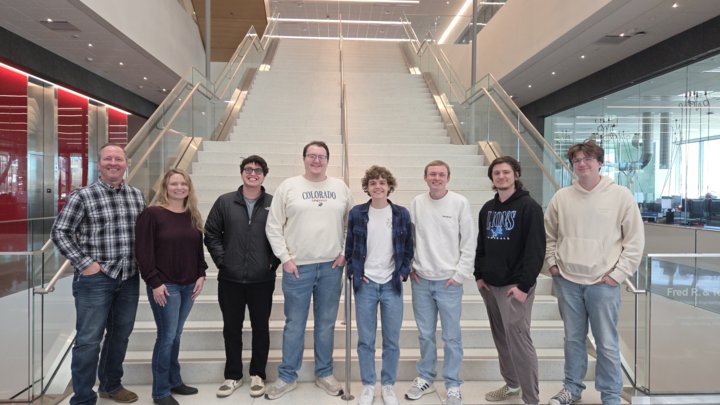
Senior Design is a computing capstone course in which students spend a full academic year working as a team on real-world project with a faculty or industry sponsor. Team members Sean Casey, Burke Groenjes, Will Bernal, Noah Russell, Colman Scharff, and Tyson Veik have spent the past six months working on Career Explore XR with project co-sponsors Jeff and Britney Falkinburg.
Jeff, an assistant professor of practice in the School of Computing, has sponsored and led several other Senior Design projects, including three versions of the Husker STEM VR app, a recruitment tool used by the College of Engineering. Britney, a school counselor at Lincoln Southwest High School, said conversations with her husband and her experiences in career advising inspired the idea for the app and motivated her to collaborate with a team herself.
“In the college and career lessons that I did, I just thought a lot of the students I worked with weren't exposed to different careers, and some of these would be a great fit for them,” Britney said. “I was trying to think of ways that we could implement technology to get them to be exposed to them, get them excited about them, and introduce them to something that they might be willing to work toward later on.”
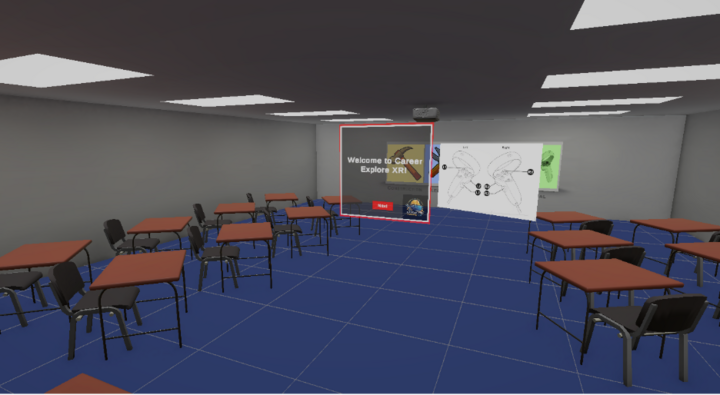
In the Career Explore XR game, players can survey several professions through simulated, hands-on activities: framing a house in construction, installing outlets as an electrician, or assembling a sink as a plumber. Informational pop-up panels throughout the game also provide additional details on job opportunities, salary ranges, and daily responsibilities.
The team envisions the app being used by school counselors and teachers, particularly those who specialize in career-oriented subjects but can’t always provide realistic experiences in the classroom.
“We know the need for skilled trades and that there aren't enough electricians and plumbers. Those are great career paths for students who aren't necessarily planning on going to a four-year college, because that’s not for everybody,” Britney said. “I think it's great to give them an opportunity to explore those different paths and not put everybody in the same box.”
Britney said she and the team selected the game’s featured careers based on which ones are not only presently needed but would continue to be relevant in the future, even as technology and skillset demands continue to change and evolve. The team considered how professions and skills would support critical sectors of society moving forward as well as what jobs and tasks would translate well into a video game.
“We wanted to choose ones that had a good balance of being educational and accurate, but also fun,” said Casey, squad lead and product manager. “For the construction scene, we know kids like to hit things, so why not let them hit the nails with a hammer?”
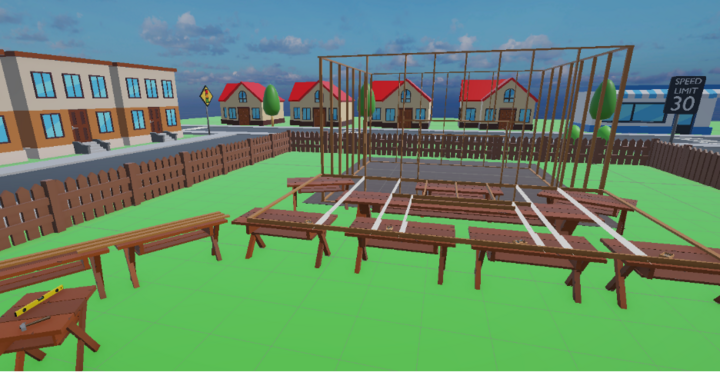
Kids had a chance to swing the virtual hammers and test-drive the app last December at Lincoln’s 2025 Hour of Code and Interactive Tech Fair, an annual event that aims to introduce K-12 students to computer science and technology. The Career Explore XR team was one of about a dozen organizations that hosted demonstration booths at the tech fair for attendees.
“It was cool to see something that we all built from scratch in the hands of students, younger and older, and seeing something we made create interest in them,” said Scharff, team developer. “We got to see kids having fun, not just playing in VR, but actually learning and building a house. It was cool to see the hours that we've put in bring joy to the kids.”
The design team said the demo session also provided them with great feedback, new insights, and improvement opportunities.
“Play testers very quickly showed us what needed to be fixed,” said Groenjes, development manager. “It's easy to think something is straightforward based on what we expect players to do, but then they break things in ways that we didn't think that they could break. That's helpful for fixing things that we didn't know could be wrong.”
Student developers on the team said the project has been a great learning experience for them, allowing them to develop new skills they can use both in their professional and personal lives.
“One of my main hobbies outside of work and school is game programming, so it’s been cool to spend more time inside of a game engine,” said Russell, team developer. “I like making games because with my day job, where I work on the back end of a database, you can't really see what you're doing, whereas when you're working on something that's physical in a sense, you can see it working, and it's a different feeling.”
The team members also said that while the game is intended to help younger students learn about potential future careers, the development process has helped them prepare for their future careers too.
“We've had classes with group projects in the past, but with this, we're meeting every week. We're working every week. We're texting each other. We have a group chat where we communicate a lot,” Casey said. “It's been a very rewarding and beneficial experience to understand what it’s like to work in the field and in the industry, and how it is to work on a team.”
When the project first started, the team members took the initiative to create their own logo, which Jeff said he believes helped unify them as a group. He said that shared identity and motivation propelled them to excel past their goals throughout the year.
“I have really enjoyed enthusiasm of this team,” Jeff said. “They were able to build three activities ahead of schedule, allowing me to push them into more advanced development than previously planned. The team has currently extended to deploy a web app build and is working on Android and iOS builds for student to use outside of the VR app.”
Britney said she’s both impressed and appreciative of the team’s efforts to use their skills to help other students develop theirs in the future.
“It's been really cool to be involved in this and to be able to think of a way that we can expose students to different careers and help them further their education,” Britney said. “I'm just amazed by their creativity and their ability to bring our vision to life.”
The Career Explore XR app is currently available to play online and will be available soon on the Meta Quest store. The team will offer live demonstrations of their project at the College of Engineering’s annual Senior Design Showcase event on Friday, April 24 in Kiewit Hall. To learn more, visit the Career Explore XR website.