Skeletal muscle plays a clear and vital role in our everyday lives, not only allowing us to move and perform physical activities, but also playing a key role in metabolic health, providing structural support to joints and other organs, and regulating body temperature. When muscles do not respond well to stressors such as aging, illness, or injury, it can negatively impact many aspects of our overall health.
With a new, three-year, $525,000 grant from the National Science Foundation, Juan Cui, associate professor in the School of Computing, is leading an interdisciplinary team to develop a digital twin of skeletal muscle — a computational framework designed to predict how muscle adapts to activity, disuse, metabolic stress, and recovery. The project aims to better understand and predict those adaptations by combining biological knowledge, experimental data, mathematical modeling, and artificial intelligence.
A digital twin is a dynamic computational representation of a physical or biological system that can be updated as new data become available. It allows researchers to simulate how the system may respond under different conditions and use those predictions to guide further testing and validation. For this project, Cui and her team will create a skeletal muscle digital twin to study how muscle changes under different physiological conditions, allowing them to better understand why muscle function declines with aging or disease and how recovery may be improved.
“The problem we want to address is why different people or biological systems can react differently in terms of activity, inactivity, stress, or recovery,” Cui said. “We can represent those processes in a computational model that is continuously informed by biological and physiological measurements. Then we can use it to predict how muscle can adapt over time.”
The digital twin, titled Skeletal Muscle Adaptive Analysis, Assimilation, and Augmented Digital Twin (SMA³-DT), will be a hybrid mechanistic-artificial intelligence framework for predicting skeletal muscle adaptation. In collaboration with Ivan Vechetti, assistant professor in the Department of Nutrition and Health Sciences at the University of Nebraska–Lincoln, and Michael Roberts, professor in the School of Kinesiology at Auburn University, the team will develop the model by combining multiscale data from controlled mouse studies with human physiological and behavioral measurements. Machine learning methods and mathematical models will be used to predict how skeletal muscle adapts to changes in activity, stress, and other physiological conditions.
“The novel part is how we bring these complementary sources of information together,” Cui said. “The animal side provides very detailed, mechanistic information and biological data that can be hard to obtain in a human setting. The human side enables us to test whether those mechanisms translate to human physiology.”
The digital twin will be built around five key components of muscular function: mechanical loading and cellular signaling, protein synthesis and breakdown, inflammation, muscle-fiber regeneration and remodeling, and metabolic regulation. The digital twin will integrate these biological mechanisms with data from various studies, creating a dynamic framework that is continuously updated, validated, and refined over time.
“We are not using AI as a black box for muscle health prediction,” Cui said. “We want to combine AI with known biological mechanisms and mathematical models. That can make the predictions more interpretable and scientifically testable, giving us greater confidence in what the model is telling us.”
In addition to laying the groundwork for future biomedical research using digital twins, this project may help scientists design more informative experiments by identifying which measurements or conditions are most valuable to test, potentially reducing unnecessary experimentation over time. With more accurate and informative computer simulations, the model could also provide insights to inform strategies for rehabilitation, healthy aging, and precision health.
“The methods developed through this framework could eventually be extended to other physiological systems or biomedical applications,” Cui said. “This will be a demonstration of how biological knowledge, mechanistic models, and AI techniques can work together to make some insightful discoveries.”
Cui said recent advancements in AI and digital twin research have made this project possible, and its success could expand opportunities for related interdisciplinary research in the future.
“This project demonstrates how computing and AI can work directly with experimental biology and human physiology,” Cui said. “Skeletal muscle gives us an excellent testbed, but the computational approaches we develop could eventually be adapted to other physiological systems as well.”
by Victoria Grdina
September 23, 2026
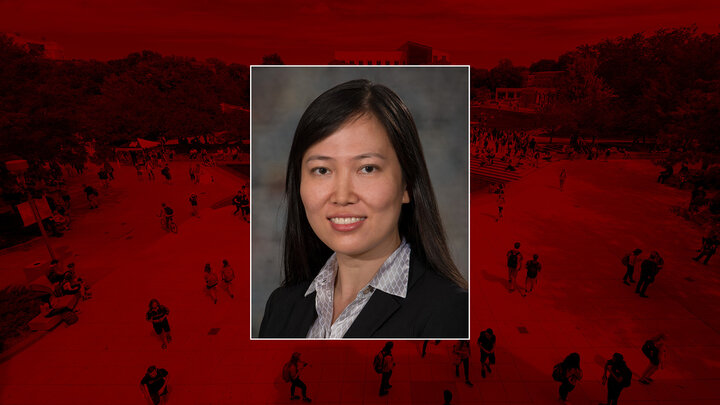
Juan Cui