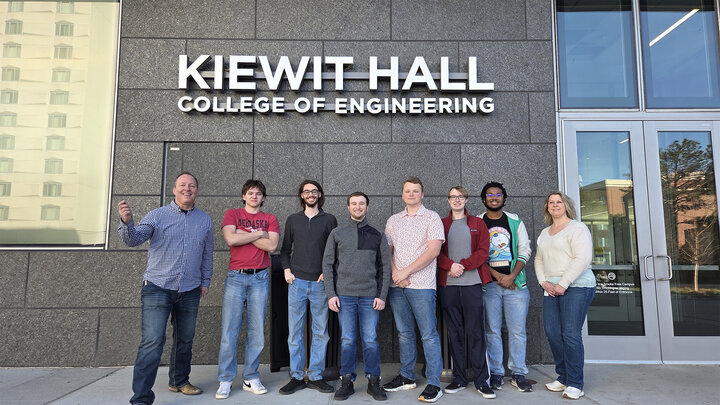
Prospective University of Nebraska-Lincoln students no longer need to set foot in Kiewit Hall to explore the College of Engineering’s new headquarters, thanks to a team of students in the School of Computing’s Senior Design program.
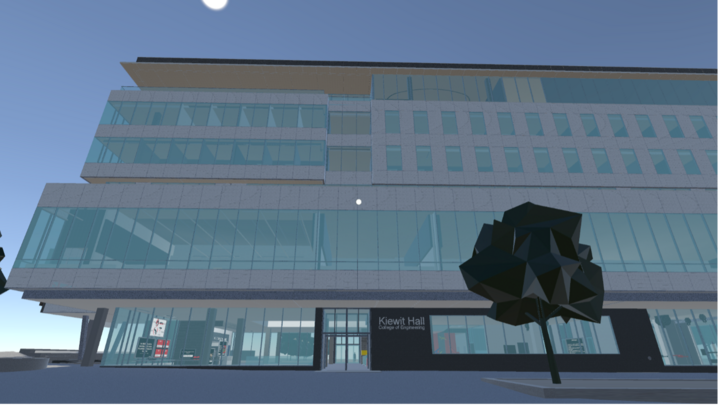
Husker STEM VR is an interactive virtual reality app and university outreach tool that allows prospective students to explore academic programs, opportunities, and key locations on campus. The latest version of the app includes new gaming features, more information about the College of Engineering, and a tour of the college’s homebase in Kiewit Hall.
Senior Design is a computing capstone course in which students spend a full academic year working as a team on real-world project with a faculty or industry sponsor. Student team members Griffin Schroeder, Owen Robb, Koen Dietrich, Owen Kreikemeier, Preston Smith, and Tyrese Walker have been working with project sponsor and assistant professor of practice Jeff Falkinburg to add new features to the app and bring old ones up to speed.
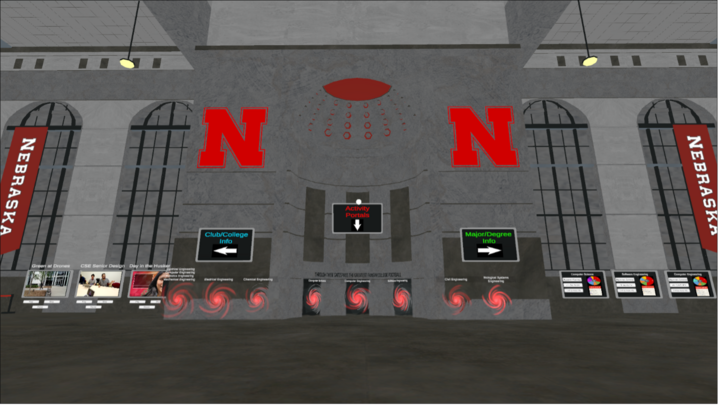
“Our vision that we developed at the start of the semester was building off of the previous group's iterations,” said Schroeder, squad lead and product manager. “We wanted to update the application to include a tour of Kiewit Hall and add other new college engineering degree activities for prospective STEM students looking into different programs.”
The original version of Husker STEM VR, built by another Senior Design team in 2021, took users on a tour of Memorial Stadium to explore majors within the School of Computing. A new team continued to build on the app the following year, adding other engineering majors and introducing new activities like flying drones and setting off fireworks in the stadium.
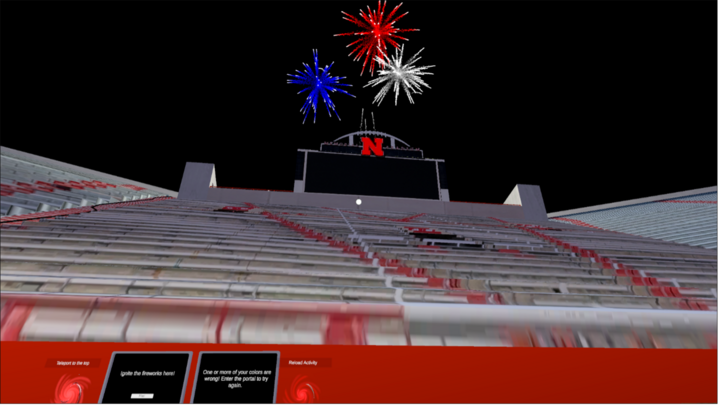
Version 3.0 expands the app even further, taking users through a newly added portal from Memorial Stadium into Kiewit Hall. Once inside, they can explore the building and its unique features, such as the Kiewit Café and the Garage, as well as the college’s majors, student organizations, research labs, and other offerings.
The team’s work began with updating the previous version of the game for new devices and systems, as it was no longer compatible with Unity 6 or functional on Android devices and required an immediate upgrade to be playable. However, upgrading the game required several system changes, largely due to Unity’s introduction of hand-tracking capabilities, which allows users to interact with game environments through gestures and movements rather than controllers. The hand-tracking feature has become a popular and essential component of many new VR games, particularly ones used for educational purposes.
“It was like building from scratch with the controls. You can't just load the previous model into the controller because that no longer exists,” said Dietrich, team developer. “Comparing the two systems is akin to comparing apples and oranges. Updating a game that’s built on an old system to support completely new systems was a monumental task.”
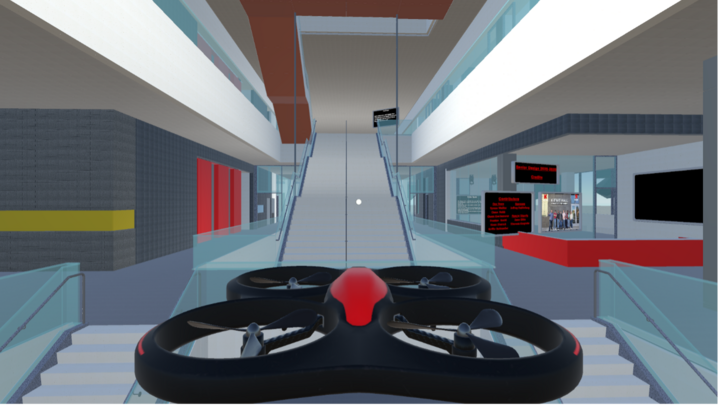
Constructing a digital version of Kiewit Hall proved to be another monumental task. The team was able to source a highly detailed and accurate model of the building directly from its architects, but the model also included internal construction elements like hidden pipes, ducts, wiring, and beams. When uploaded into the game, it amounted to approximately 50 gigabytes in size.
“When we first added it to Unity, we were getting about four frames per second,” said Walker, team developer. “That's like a PowerPoint presentation.”
The team members were able to reduce the size significantly by deleting unnecessary elements—which they estimated to be around 3 million objects—to improve performance while preserving key visual details, making for a highly realistic tour experience for users.
Falkinburg said he asked a lot of his team, and they rose to every challenge.
“I gave them pretty big tasks and goals, and they rolled with the punches,” Falkinburg said. “It wasn't like they came in with a given system. There was a process in the system, but they had to make a lot of modifications to it to update it, and I'm genuinely impressed with what they were able to accomplish.”
Falkinburg said he intentionally made requests and set project goals that would give the students a learning experience that would prepare them well for work in the industry, which is the ultimate goal of the Senior Design program.
"In the middle, I threw a monkey wrench into it and gave them new requirements,” Falkinburg said. “In industry, they're always going to change their minds and have requirements creep, so it's another kind of educational experience for them.”
The team members agreed working on the project has been a great learning opportunity that will help them beyond the classroom. They also said it’s been rewarding to see their actual classrooms come to life.
“When I finally got the Kiewit model into Unity, I was like, ‘This is actually cute. I walk into this building every day for classes, and now I'm seeing it in my game,’” Walker said. “It’s really cool, and I’ve liked watching it come together.”
After watching three iterations of his project develop and grow over the last five years, Falkinburg said what he’s enjoyed most is seeing how the students work together to bring his ideas to life, often in a different way than he originally envisioned.
“It’s always fun to see what ideas they have for developing, because I have a few things that I want them to do, but how they implement them is their own brainchild,” Falkinburg said. “I love seeing the teams interact with each other, especially when they're working well together, when they like each other, and they're actually making good progress.”
The Husker STEM VR app is currently available for download and online play. The team will offer live demonstrations of their project at the College of Engineering’s annual Senior Design Showcase event on Friday, April 24 in Kiewit Hall. To learn more, visit the Husker STEM VR website.